Quick Answer
To cut stainless steel wire rope cleanly, wrap the cut point tightly with electrical or masking tape, then cut through the center of the tape with proper cable cutters (bypass-style, not diagonal pliers). For diameters above 6mm (1/4"), use an abrasive cut-off wheel. Never use bolt cutters on 7x19 rope — the shearing action crushes and splays the strands.
Cutting wire rope looks like a ten-second job until the end explodes into a brush of loose wires that won't go into a fitting, won't thread through a post, and won't twist back together. Whether you're installing a cable railing, re-cabling a gym machine, or trimming rigging to length, the cut itself decides whether the rest of the job goes smoothly. This guide covers why wire rope frays, the three methods that actually work, the tools that ruin the end, and how to seal it once it's cut.
Why Wire Rope Frays When Cut
Wire rope is made by twisting wires into strands and strands into rope, so every wire is held in a helix under stored torsional tension — the moment you cut it, nothing holds that twist in place and the wires spring back toward straight, splaying the strands apart.
How badly a rope frays depends on its construction. Preformed rope, whose wires are shaped into their helix before closing, holds together far better than non-preformed rope. Fine-wire constructions like 7x19 (133 thin wires) splay more readily than stiffer 7x7 or 1x19, which is why the cutting method matters most on flexible rope. Our 7x7 vs 7x19 construction comparison explains how wire count drives flexibility — and, by extension, how hard an end is to keep tidy.
Method 1: Tape + Cable Cutters (≤6mm / 1/4")
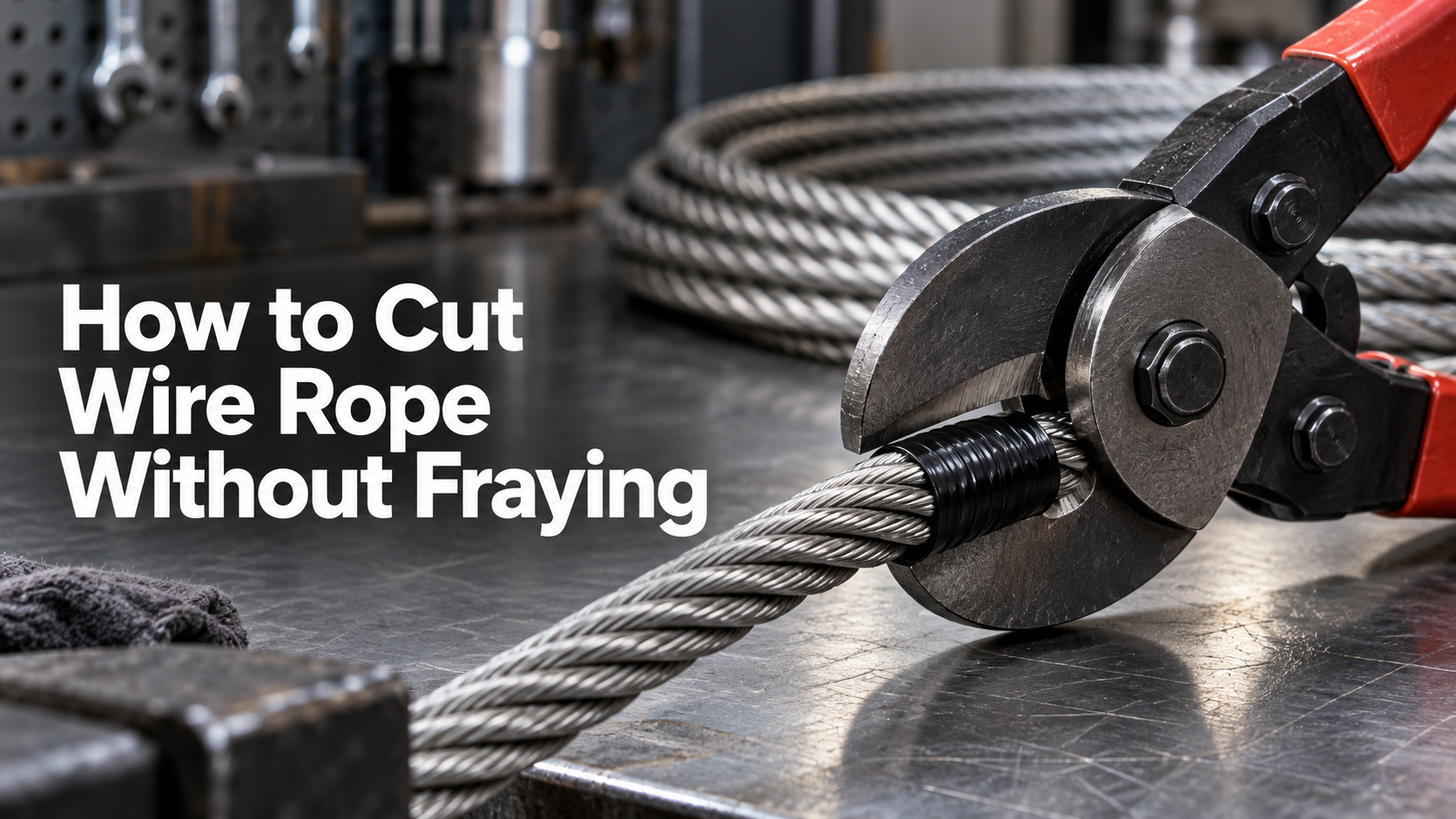
For the diameters most people cut — 1/16" to 1/4" (1.5mm to 6mm) cable railing, gym cable, and light rigging — tape and a proper cable cutter give the cleanest, fastest result. The cutter matters: use a bypass-style cable cutter, whose curved blades slide past each other and wrap around the rope as they close, cutting every wire at once instead of pinching it flat. Check the tool's rating for stainless steel specifically — stainless wire is drawn much harder than galvanized, and a cutter rated for 6mm galvanized cable may only handle 4–5mm stainless.
- Measure and mark. Mark the cut point with a fine marker, adding any allowance your end fitting needs. Measure twice — you can't add length back.
- Tape tightly. Wrap 3–4 layers of electrical or masking tape around the mark, about 1" (25mm) wide, pulling the tape taut as you go. Wrap in the same direction as the rope's lay so you tighten the twist rather than loosen it.
- Re-mark on the tape. Transfer your cut mark onto the tape so the cut lands in the center of the wrapped section, leaving taped rope on both sides.
- Cut in one firm stroke. Seat the rope deep in the jaws, perpendicular to the blades, and close the handles in a single steady squeeze. Don't rock or twist the cutter; for 5–6mm stainless, a ratcheting cutter saves your wrists.
- Check the end. Both ends should be round and compact. Leave the tape on until you're ready to install a fitting or seal the end, then remove it and terminate immediately.
Method 2: Abrasive Cut-Off Wheel / Dremel (Large Diameters & Batches)
Above 6mm (1/4"), hand cutters run out of capacity on stainless, and an abrasive cut-off wheel becomes the right tool. A thin (1.0–1.6mm) metal cut-off disc on an angle grinder or chop saw cuts any diameter cleanly, and a chop saw with a length stop is the fastest way to cut many identical pieces. For small diameters (up to about 4mm), a rotary tool such as a Dremel with a reinforced cut-off wheel works well for occasional cuts.
- Tape and clamp first. Tape the cut point as in Method 1, and clamp the rope in a vise (or the saw's fixture) on both sides of the cut so the ends can't whip or unlay.
- Let the wheel do the work. Light, steady pressure gives a cleaner cut and less heat than forcing the disc.
- Use stainless-rated ("INOX", iron-free) discs. A disc that has been used on carbon steel embeds iron particles in the stainless surface, which later show up as rust spots near the cut.
- Mind the heat-affected zone. Abrasive cutting heats the last few millimeters of rope. You'll see blue/straw heat tint, the wire ends soften, and the outer wires can fuse into a slight burr. Heat-tinted stainless has reduced corrosion resistance, so on exposed outdoor or marine work, trim or pickle that zone — and file off any burr, or the end won't enter a swage fitting.
- Protect yourself. Wear a face shield and gloves; the sparks and loose wire fragments are sharp and hot.
Method 3: Soldering or Fusing the Cut Point
When you need an end that will never unravel — a leader you'll thread through drilled posts or pulleys, a decorative cable, or a fine control cable — bond the wires together before you cut. Clean the cut zone, apply flux, flow solder across about 10–15mm of rope, let it cool, then cut through the middle of the soldered section. Both sides keep a solid, fray-proof end.
Stainless steel makes this harder than it sounds:
- Ordinary electronics solder won't stick. Stainless's chromium-oxide film repels solder. Use a silver-bearing solder or silver brazing alloy with a flux formulated for stainless steel.
- Wash off the flux. Stainless fluxes are aggressive and will corrode the rope if left on. Rinse and neutralize the joint thoroughly after soldering.
- Keep the heat brief and local. Silver brazing runs hot enough to discolor stainless and, with prolonged heating, reduce its corrosion resistance. Heat only the section you're bonding.
- Don't solder where a fitting will grip. The soldered section is stiff and slightly oversize. Swaged and crimped fittings need bare, flexible rope inside the sleeve, so cut off the soldered tip before terminating, or use soldering only on ends that stay unterminated.
On large diameters, a quick TIG fuse of the end does the same job without filler metal — but that's a welding-shop task, not a site task.
What NOT to Use: Bolt Cutters, Hacksaws & Diagonal Pliers
Each of these tools damages the rope in its own way, and the damage usually goes beyond a messy end:
- Bolt cutters close two wedge-shaped jaws straight onto the rope from opposite sides. Instead of slicing the wires, they crush the rope flat before it shears, splaying the strands and leaving a mushroomed, oval end that is wider than the rope. On 7x19, with its fine wires, the result is a brush that will never fit a fitting bore. Hardened stainless wire also chips bolt cutter jaws.
- Hacksaws cut one wire at a time. As each wire parts, the rope's stored twist is released progressively, so the strands loosen and rotate under the blade and the end unlays as you saw. It's slow, ragged, and hard to keep straight. In an emergency, heavy taping, a vise, and a fine 32 TPI blade will get you through, but expect to trim the end afterward.
- Diagonal pliers (side cutters) are made for soft copper and mild steel wire. Spring-temper stainless nicks and dents their cutting edges, they can only bite a few wires at a time, and the wedge action flattens what's left into a deformed, frayed end — ruining both the tool and the rope.
Sealing the Cut End
Tape is a temporary fix. Once the rope is cut, choose a permanent end treatment based on what happens to that end next:
- Heat-shrink tubing: slide on a short length of adhesive-lined (dual-wall) heat-shrink and shrink it with a heat gun. Neat, cheap, and easy to remove later — ideal for cables in storage or ends that will be terminated on site.
- Glue or dip coating: wicking thin cyanoacrylate or epoxy into the last few millimeters, or dipping the end in liquid rubber coating, locks the wires permanently. Keep it to the very tip so it doesn't add diameter where a fitting needs to slide on.
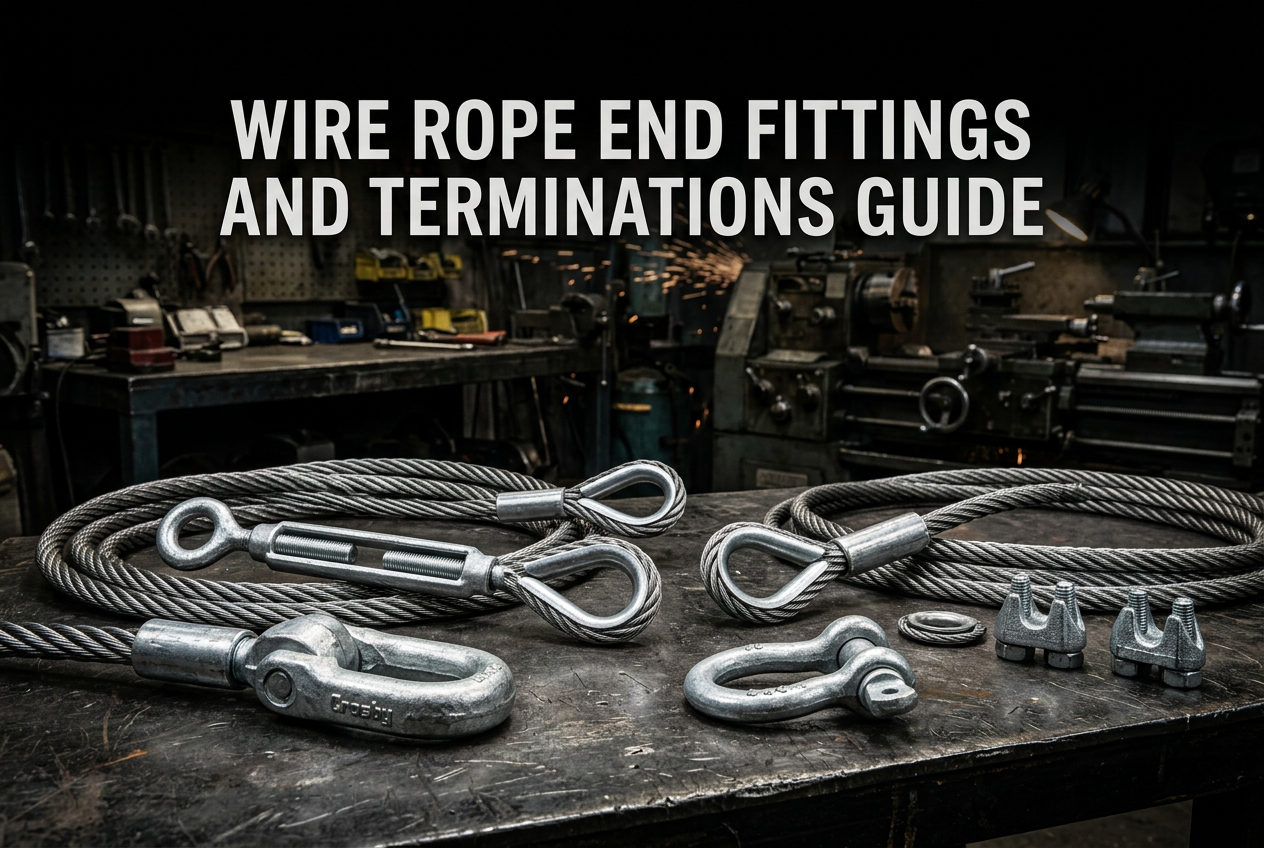
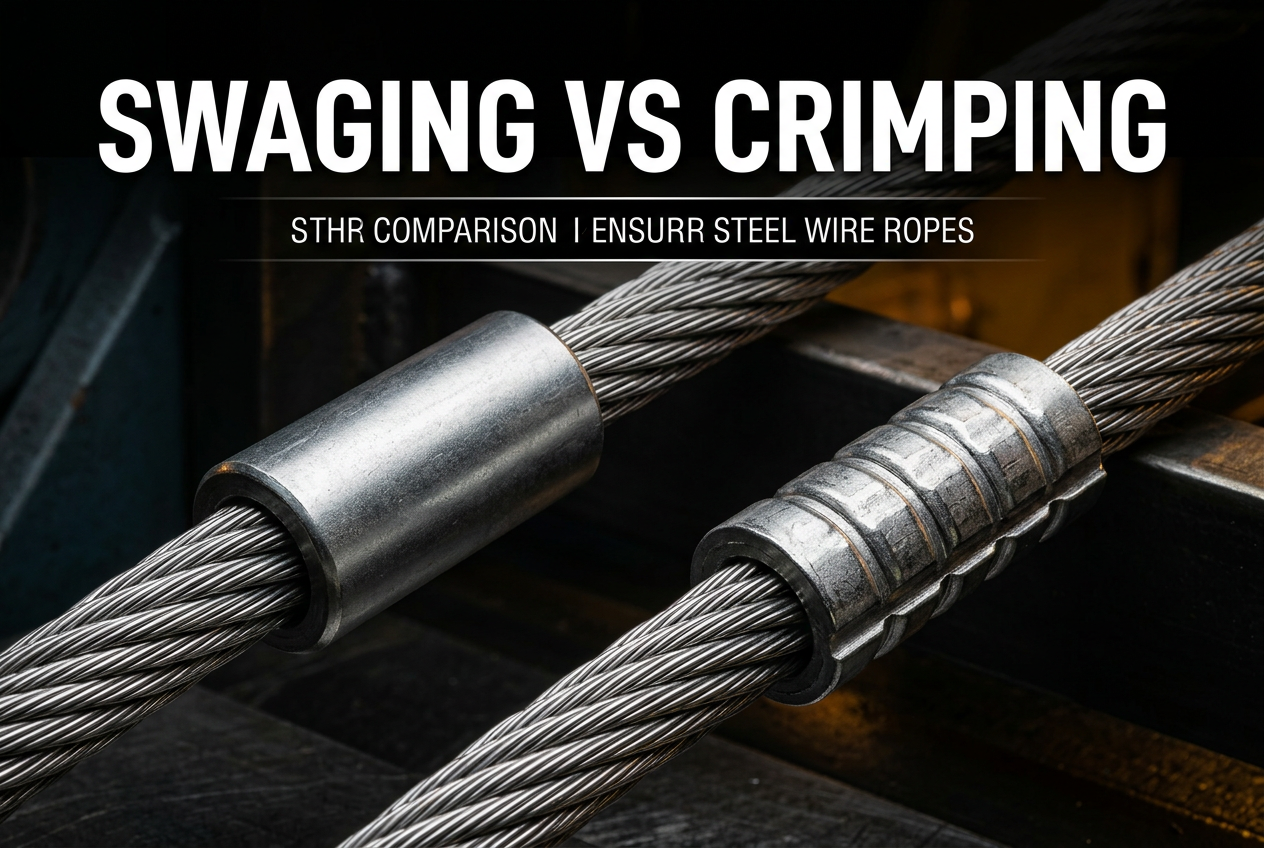
- Terminate it straight away: the best seal is the end fitting itself. A swaged stud, eye, or ferrule pressed on immediately after cutting locks every wire for good. Our swaging vs crimping guide explains which method fits your load and tooling, and the wire rope end fittings guide covers the full range of terminations.
For cable railing, a clean, round end is not optional — swage studs and push-in fittings won't accept a frayed or mushroomed tip. The installation section of our stainless steel cable railing wire rope guide covers cutting and tensioning on site.
Cutting Coated Wire Rope
Vinyl- and nylon-coated rope — common on gym machines, security tethers, and garden fittings — needs one extra step. If you cut straight through the jacket, the cutter stretches the coating as it closes, and the plastic then snaps back and retracts from the end, exposing a few millimeters of bare, unsupported wire that frays easily.
- Score the coating first. Run a sharp utility knife or a cable jacket stripper around the circumference at the cut point, cutting through the jacket without nicking the wires underneath.
- Strip back if you're terminating. Most swaged fittings must grip bare rope, so remove the jacket for the length of the sleeve.
- Cut the core. Cut the steel with cable cutters sized for the coated outside diameter — the jaws have to open wide enough to fit the jacket, not just the steel.
Remember that coated rope is specified by its bare steel diameter, not its coated OD, so check which you're measuring before ordering replacement cable or fittings. Our guide on how to measure wire rope diameter shows the correct caliper technique, and the gym cable replacement guide lists the standard coated sizes used on fitness equipment.
Factory Cut-to-Length Service
If you're cutting more than a handful of pieces — a railing contractor with 300 runs, a gym equipment refurbisher, or an OEM building assemblies — the cleanest cut is the one you never make on site. As a wire rope manufacturer, we cut, seal, and terminate to your specification:
- Precision cut-to-length: rope measured and cut on fixtures, so every piece in a batch matches your drawing.
- Sealed ends: heat-shrink or fused ends applied at the factory, so cable arrives ready to thread and never frays in transit.
- Factory-swaged fittings: studs, eyes, ball stops, and threaded terminals swaged and inspected in-house, with assemblies that install straight out of the box.
- 304 or 316 stainless, bare or coated, in 1x19, 7x7, and 7x19 constructions, with mill test certificates on every batch.
Send us your diameter, construction, lengths, quantities, and end fittings, and we'll quote factory-direct pricing — use the form below or contact our team.
Frequently Asked Questions
What is the best tool to cut wire rope?
For wire rope up to 6mm (1/4"), the best tool is a bypass-style cable cutter rated for stainless steel — its curved blades wrap around the rope and cut every wire at once. Above 6mm, or for batch cutting, use an abrasive cut-off wheel on an angle grinder or chop saw. Avoid bolt cutters, hacksaws, and diagonal pliers, which crush or progressively unlay the rope.
How do you keep wire rope from fraying when cutting?
Wrap the cut point tightly with 3–4 layers of electrical or masking tape, about 1" (25mm) wide, then cut through the center of the tape so both ends stay bound. Use a sharp cable cutter in one firm stroke. After cutting, seal the end with heat-shrink tubing, glue, or solder, or install the end fitting immediately.
Can you cut wire rope with bolt cutters?
You can, but you shouldn't. Bolt cutters crush the rope flat before shearing it, which splays the strands and leaves a mushroomed end that is wider than the rope and won't fit into a fitting. The damage is worst on fine-wire 7x19 rope, and hardened stainless wire can chip the bolt cutter jaws.
Can you cut wire rope with an angle grinder?
Yes — an angle grinder with a thin metal cut-off disc is the standard method for stainless wire rope above 6mm (1/4"). Tape and clamp the rope on both sides of the cut, use an iron-free (INOX) disc to avoid rust contamination, and file off any burr afterward. The cut heats the last few millimeters of rope, so trim that zone on corrosion-critical jobs.
How do you cut vinyl-coated wire rope?
Score the coating all the way around with a sharp utility knife first, without nicking the wires, then cut the steel core with cable cutters sized for the coated diameter. Cutting straight through the jacket stretches it, and it retracts afterward to expose frayed bare wire. Strip the coating back for the length of the sleeve if you're installing a swaged fitting.